
✓Board-certified pediatric dentists
✓Stainless steel and tooth-colored zirconia crown options
✓Most crowns placed in a single appointment
✓We work with multiple insurance carriers and offer flexible financing solutions
Now accepting new patients. Questions about a crown for your child’s tooth? Call our Sunnyvale office today to talk with our team about treatment options, insurance, and financing, or request an appointment online anytime.
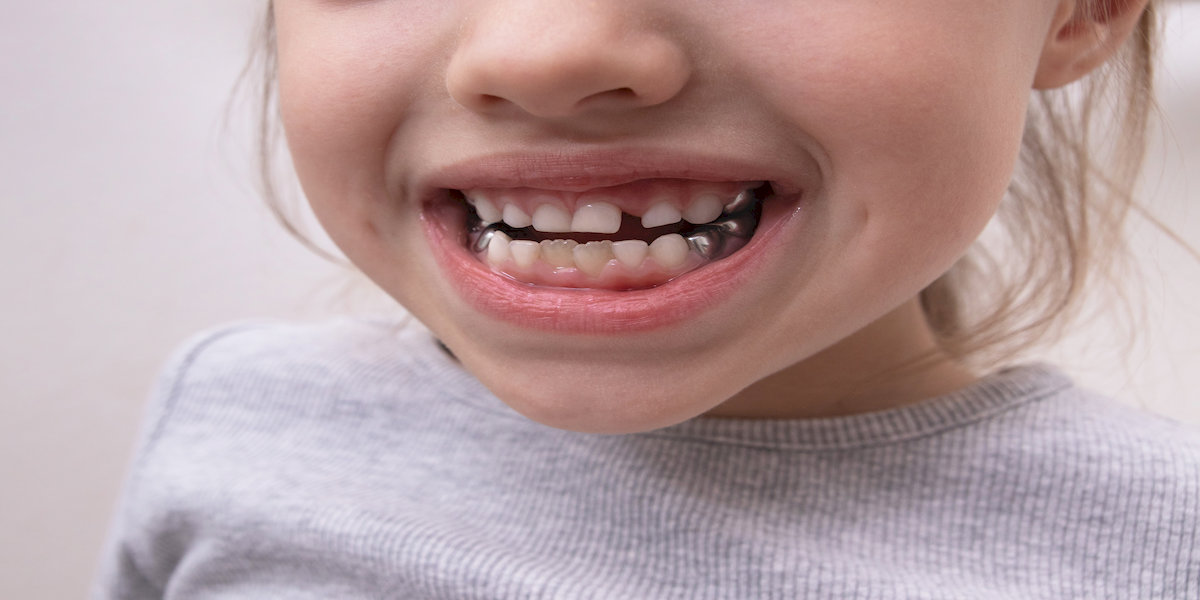
When a child’s tooth has been significantly damaged by decay, fracture, or the effects of a dental infection, a filling alone is often not enough to restore it fully. In these situations, a pediatric dental crown provides the full-coverage protection that allows the tooth to remain functional, structurally sound, and free from further deterioration for the remainder of its natural lifespan. Crowns for primary teeth are a well-established part of pediatric restorative care, and the materials used to make them have advanced considerably, giving families today more options than ever before. A 2022 systematic review published in the National Institutes of Health’s National Library of Medicine analyzed findings across 3,575 primary teeth and found that zirconia crowns for children demonstrated strong outcomes across multiple clinical measures, including good retention, high fracture resistance, color stability, healthy gingival response, and no recurrent caries, with high parental acceptance reported across the reviewed literature.
At Bay Area Kids Dentist in Sunnyvale, CA, pediatric crowns are placed by board-certified pediatric dentists who hold the highest available credential in the specialty: certification through the American Board of Pediatric Dentistry (ABPD). Our team has extensive experience selecting the right crown type for each child’s clinical needs, age, and individual circumstances, and we take the time to explain our recommendations clearly so that parents feel confident and informed before any treatment begins.
Why Primary Teeth Are Worth Restoring
One of the most common questions parents bring to our Sunnyvale office is whether a baby tooth that has significant decay is truly worth saving. It is a fair question, and the answer is yes, with purpose and forethought behind it. Primary teeth do more than fill the space in a young child’s mouth.
- They allow children to bite, chew, and eat a varied diet during a period of rapid growth when nutrition is especially important.
- They shape how children form sounds and develop speech.
- Each primary tooth holds the space that the corresponding permanent tooth will occupy when it erupts.
- When a primary molar is lost too early, neighboring teeth drift into the gap and narrow the path the permanent tooth needs to emerge into correct alignment.
Preserving a damaged primary tooth with a crown when the tooth still has meaningful time remaining before natural shedding is a straightforward investment in the developmental trajectory of the permanent dentition. Our team makes crown recommendations only when the clinical evidence supports them, and we discuss the expected timeline for natural exfoliation as part of every treatment conversation.
When a Crown Is the Right Choice
Not every cavity requires a crown. Our pediatric dentists evaluate each situation individually and recommend full-coverage restoration when the extent of decay or damage makes it the most appropriate and durable option.
Extensive Decay
Decay that involves multiple tooth surfaces or has extended into the inner dentin layer
After Pulp Therapy
A tooth that has undergone a pulpotomy or pulpectomy and needs a strong protective covering
Significant Fracture
A tooth that has fractured significantly due to trauma and cannot be reliably restored with a filling
High Caries Risk
Children at elevated cavity risk who are likely to develop recurrent decay around a conventional filling
When a child has multiple teeth that need restoration, our team coordinates care in a way that is as efficient and comfortable as possible, often grouping procedures thoughtfully to minimize the number of separate appointments required.
Crown Options for Children
Bay Area Kids Dentist offers two primary crown types for children. Our board-certified pediatric dentists discuss both options with every family and guide the decision based on the location of the tooth, the child’s age, and what matters most to the family.
| Feature | Stainless Steel Crown | Zirconia Crown |
|---|---|---|
| Appearance | Silver metallic | Tooth-colored, natural-looking |
| Best For | Back molars; high-function areas | Front teeth; families preferring aesthetics |
| Durability | Exceptional; decades of clinical track record | Strong; biocompatible ceramic; resists chipping |
| Placement Time | Single appointment; no lab needed | Single appointment; slightly longer prep |
| Cost | Generally lower | Generally higher; often covered by insurance |
| Gum Health | Well-tolerated | Supports healthy gum tissue at the margin |
What the Crown Appointment Involves
For most children, placing a pediatric crown is a single-appointment procedure. Here is what to expect from start to finish:
1
Numbing the Area
The tooth and surrounding gum are gently numbed with local anesthetic so your child feels no discomfort during the procedure.
2
Decay Removal and Tooth Preparation
All decay is removed and the tooth is shaped to receive the crown. Our team uses behavioral guidance throughout to keep your child calm and comfortable.
3
Crown Fitting and Placement
The appropriate crown is selected, fitted precisely, and cemented permanently into place in a single visit.
4
Aftercare Instructions
We send families home with clear written aftercare instructions and remain available to answer any questions that arise during the adjustment period.
For children who experience significant dental anxiety or who require treatment on multiple teeth, our team may also discuss whether sedation dentistry options would make the appointment easier. We individualize this decision based on the child’s temperament, age, the extent of treatment needed, and parent preference.
After crown placement, there is typically a brief period of adjustment as the child adapts to the feel of the new restoration. Most children adapt quickly, and any sensitivity resolves within a few days.
Insurance and Payment for Pediatric Crowns in Sunnyvale
Pediatric crowns are a restorative procedure and are covered in whole or in part by most major dental insurance plans. Bay Area Kids Dentist accepts Delta Dental PPO, Cigna Dental, and TRICARE. For families without insurance or with out-of-pocket balances, we offer flexible payment options including CareCredit, Cherry, HSA/FSA, and membership and discount plans. Our team provides a clear estimate before treatment begins so there are no surprises, clinically or financially.
Bay Area Kids Dentist: Restorative Care in Sunnyvale
At Bay Area Kids Dentist, we approach every restorative case with the goal of preserving as much healthy tooth structure as possible while giving the tooth the protection it needs to last until natural shedding. Our board-certified pediatric dentists bring both clinical precision and genuine care to every procedure, and we work hard to make treatment visits positive experiences that build rather than diminish a child’s comfort with dental care over time.
If your child has a tooth that may need a crown, or if you have questions about restorative treatment options, we welcome you to reach out to our Sunnyvale team through our contact form. We’re here to help your child’s smile stay healthy and strong.
Bay Area Kids Dentist — Sunnyvale
1565 Hollenbeck Ave STE 102, Sunnyvale, CA 94087
(408) 520-2656
Frequently Asked Questions about Pediatric Crowns in Sunnyvale
Does my child really need a crown on a baby tooth?
Yes, in many cases. Baby teeth serve critical functions: they help children chew and eat properly, guide speech development, and hold space for the permanent teeth coming in behind them. When a primary tooth has extensive decay, has had pulp therapy, or has fractured significantly, a crown is often the most reliable way to protect it until it sheds naturally. Our board-certified pediatric dentists recommend crowns only when the clinical evidence supports them.
What is the difference between a stainless steel crown and a zirconia crown?
Stainless steel crowns are silver-colored, extremely durable, and placed in a single visit without a lab. They are the most common choice for back molars. Zirconia crowns are tooth-colored and blend naturally with surrounding teeth, making them a popular choice for front teeth or families who prefer an aesthetic option. Both types are clinically proven for primary teeth. Our team discusses the pros and cons of each based on which tooth is involved and what matters most to your family.
Is the crown placement procedure painful for my child?
No. The area is numbed with local anesthetic before any preparation begins, so your child should not feel pain during the procedure. Our Sunnyvale team uses behavioral guidance techniques throughout, including age-appropriate explanations and a calm, child-centered approach, to keep children comfortable and at ease from start to finish.
How long will my child's crown last?
Pediatric crowns are designed to last for the remainder of the tooth's natural lifespan. When the baby tooth is ready to shed naturally, the crown comes out with it. No removal procedure is needed. We check the condition of existing crowns at every preventive visit to make sure they remain secure and are functioning properly.
Does insurance cover pediatric dental crowns?
In most cases, yes. Pediatric crowns are a restorative procedure covered in whole or in part by most major dental insurance plans. Bay Area Kids Dentist accepts Delta Dental PPO, Cigna Dental, and TRICARE. Flexible payment options including CareCredit, Cherry, and HSA/FSA are also available. Our team will give you a clear cost estimate before any treatment begins.
What should my child eat after getting a crown?
For the first 24 hours, we recommend soft foods and avoiding anything very sticky or hard on the side where the crown was placed. After that initial period, your child can typically return to their normal diet. We send families home with specific aftercare instructions and are always available to answer follow-up questions.
Problems We Treat
 Emergency Tooth Extraction
- Severe Toothache
- Loose or Dislodged Tooth
- Bleeding Gums
- Knocked Out Tooth
- Infection or Swelling in the Mouth
- Jaw Pain
- Chipped or Cracked Tooth


Sealants
Dental sealants are a thin coating of composite material that forms a hardened shield over the tooth...

Silver Diamine Fluoride
At Bay Area Kids Dentist in Sunnyvale, CA, we offer silver diamine fluoride (SDF) as an innovative solution...

Digital X-Rays
Our dental clinic is equipped with digital X-rays, ensuring the safest and most effective imaging for your child...

Dietary Counseling
At Bay Area Kids Dentist in Sunnyvale, CA, we are aware that diet plays a crucial role in maintaining your child's oral health.

Oral Hygiene Instruction
Startlingly, the American Academy of Pediatric Dentistry reports that tooth decay affects a staggering 40% of children...
In-office prescription toothpaste available
At Bay Area Kids Dentist in Sunnyvale, CA, we offer in-office prescription toothpaste designed to enhance your child’s tooth...

First Appointment
At Bay Area Kids Dentist, we understand that a toddler's first dental appointment is an important step...

Pediatric Emergency Dental Care
At Bay Area Kids Dentist in Sunnyvale, CA, we specialize in providing prompt and effective emergency pediatric dental care...

Laughing Gas
Laughing gas, publicly known as nitrous oxide, helps children who are highly fearful of the dentist feel more relaxed...

Sedation Dentistry
At Bay Area Kids Dentist in Sunnyvale, CA, we perform a range of sedation options to ensure your child's comfort...

Special Needs Dental Care
At Bay Area Kids Dentist in Sunnyvale, CA, we recognize the unique challenges children with special health needs face...

Tooth Extractions
At Bay Area Kids Dentist in Sunnyvale, CA, we offer expert tooth extraction services tailored to the unique needs of children...

Space Maintainers
When a child loses a baby tooth early, the surrounding teeth might shift into the space, leading to alignment...

White Filling
At Bay Area Kids Dentist in Sunnyvale, CA, we provide practical solutions for child tooth decay...
