
When a child has a cavity, the automatic assumption is that drilling and filling are the only options. That assumption, however, is outdated. Silver diamine fluoride is one of the most powerful tools in modern pediatric dentistry, and it works without needles, without drills, and often in under five minutes — offering families an entirely different kind of appointment than they imagined.
At Bay Area Kids Dentist, we have always prioritized treatments that are as comfortable and child-friendly as possible, which is exactly why SDF fits so naturally into our practice. Our team of board-certified pediatric dentists offers silver diamine fluoride at our offices in Santa Clara, Sunnyvale, and Morgan Hill as part of a comprehensive approach to keeping Bay Area children cavity-free. Whether your child is a toddler seeing us for the first time or a school-age patient managing active decay, SDF may be a strong fit.
What Is Silver Diamine Fluoride?
Silver diamine fluoride is a liquid solution composed of four key components: silver, fluoride, water, and ammonia. Each plays a specific role. The silver acts as an antimicrobial agent, killing the bacteria responsible for tooth decay. The fluoride works to remineralize weakened enamel, strengthening the tooth structure and making it more resistant to future decay. Together, these two active ingredients create a barrier that halts the progression of cavities and protects the tooth from further damage.
According to a 2024 systematic review published in PMC via the National Institutes of Health, SDF has demonstrated strong effectiveness in both preventing and arresting dental caries in children and adolescents across multiple randomized controlled trials. It is one of the few treatments backed by robust pediatric-specific research, and it has been used successfully in clinical settings in Japan for over 80 years.
How Is SDF Applied?
The Treatment Process
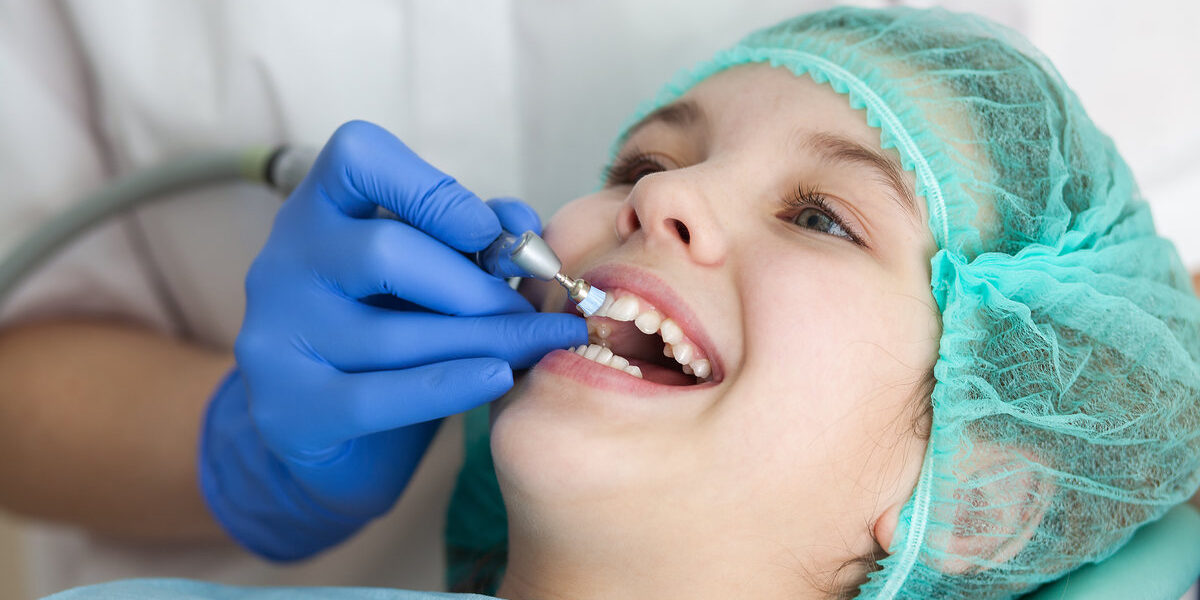
The application of silver diamine fluoride is straightforward and quick. First, the teeth are gently dried using compressed air. From there, a small amount of SDF solution is applied to the affected tooth using a microbrush, and the solution is allowed to work for approximately one minute. The entire process typically requires no anesthesia, no drilling, and no sedation, making it especially well-suited for young children, toddlers, or patients who experience dental anxiety.
One important aspect parents should know ahead of time is that SDF causes active decay to stain dark, often appearing black or brown. This discoloration is a sign that the treatment is working, as the arrested decay will darken where the bacteria have been neutralized. Healthy tooth structure is not affected by the staining. For many families, this tradeoff is well worth avoiding a more invasive procedure, and our team always walks parents through exactly what to expect before any treatment begins.
Who Is a Good Candidate for SDF?
Silver diamine fluoride is a particularly valuable option for children who may not tolerate traditional drilling. Toddlers and very young children with early childhood caries, kids with multiple areas of decay, patients who have dental anxiety, and children with special health care needs can all benefit from SDF as a first-line treatment. Our team also uses SDF to stabilize active cavities in young children until they are developmentally ready for restorative treatment. For families using our special needs dental care services, SDF is often an especially well-suited option given how minimally invasive it is.
What to Expect After Treatment
Once SDF is applied, we recommend avoiding eating or drinking for at least one hour to allow the solution to fully cure on the tooth surface. The treated area will darken over time as the silver reacts with the arrested decay, and this is a completely normal and expected result. Healthy enamel will not be affected by discoloration.
At follow-up appointments, our dentists will evaluate the treated teeth to assess whether the caries have been fully arrested or whether additional SDF application or restorative care is needed. SDF is most effective when applied at consistent intervals, typically twice per year. Our team will guide your family through a personalized treatment plan based on your child’s specific needs, existing dental health, and the number of teeth involved.
It is also important to understand that SDF is not always a permanent solution. In some cases, once a child grows older and is better able to tolerate longer appointments, a filling or other restorative procedure may still be recommended to replace the stained, treated area. SDF serves as an excellent bridge between early childhood decay management and full restorative care when the timing is right. Our children’s dentistry team is experienced in coordinating this kind of long-term care so nothing falls through the cracks.
Why Bay Area Kids Dentist Offers SDF
We are always evaluating what is best for the children we treat, and SDF represents exactly that. Its ability to stop cavities in their tracks without requiring a child to sit through a lengthy, frightening procedure aligns directly with our mission: to ensure that every child has a positive, comfortable experience during every dental visit.
Our practice is built on the belief that children are not simply small adults and that their dental care should reflect their developmental stage, their comfort level, and their individual needs. SDF is one piece of a broader commitment to minimally invasive, evidence-based pediatric care that prioritizes long-term outcomes over short-term convenience.
Schedule an SDF Consultation at Bay Area Kids Dentist
Bay Area Kids Dentist was founded by Dr. Yahya Radwan, who completed his pediatric dentistry residency at the Women’s and Children’s Hospital of Buffalo, NY after years of clinical service. Every dentist at our practice is board-certified by the American Board of Pediatric Dentistry, representing the highest standard of excellence in our field. We accept Delta Dental PPO, Cigna Dental, TRICARE, and a range of flexible payment options including CareCredit and Cherry financing so that access to quality care is never a barrier for Bay Area families. Our team of pediatric dental specialists brings both clinical expertise and genuine warmth to every appointment.
If you are wondering whether silver diamine fluoride is the right option for your child, we encourage you to start the conversation with us. We serve families across Santa Clara, Sunnyvale, and Morgan Hill, and we are always welcoming new patients. Contact our office to schedule a consultation and find out how SDF can help your child get the care they need comfortably and confidently.
Problems We Treat
 Emergency Tooth Extraction
- Severe Toothache
- Loose or Dislodged Tooth
- Bleeding Gums
- Knocked Out Tooth
- Infection or Swelling in the Mouth
- Jaw Pain
- Chipped or Cracked Tooth


