
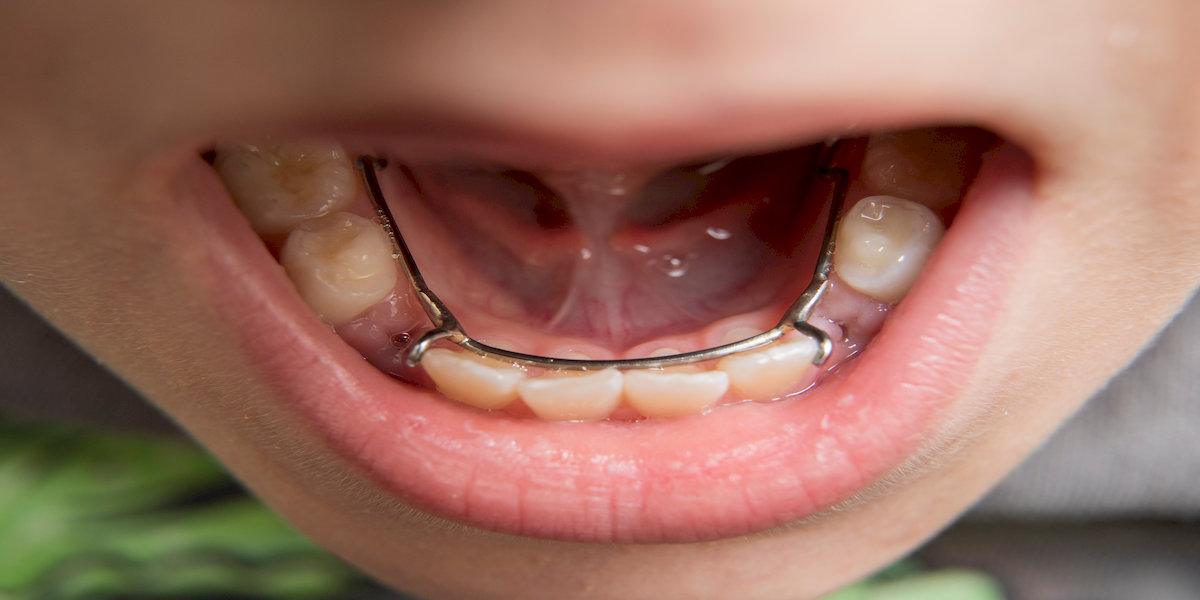
When a child loses a baby tooth earlier than expected, it can feel like a minor event. Baby teeth fall out eventually, so parents often assume the gap will simply take care of itself. In reality, the teeth on either side of that empty space begin drifting almost immediately, and without intervention, the permanent tooth may no longer have adequate room to erupt in its proper position. According to a clinical review published in the National Institutes of Health’s National Library of Medicine, premature loss of primary teeth can disrupt the alignment of permanent teeth, leading to space loss and malocclusion that may require complex orthodontic treatment later. Space maintainers are the preventive solution designed to stop that drift before it creates a larger problem.
At Bay Area Kids Dentist in Morgan Hill, CA, our board-certified pediatric dentists are trained to evaluate each case of early tooth loss and determine quickly whether a space maintainer is the right intervention. Every dentist on our team holds board certification through the American Board of Pediatric Dentistry (ABPD), reflecting the highest standard of specialized training in managing the developing dentition. We communicate clearly with families about why space maintenance matters and what to expect every step of the way.
Why Primary Teeth Matter More Than Most Parents Realize
Baby teeth do far more than give children something to chew with. They serve as guides for incoming permanent teeth, hold space in the dental arch, support proper jaw development, and even play a role in speech development. When a primary tooth is lost prematurely due to decay, a dental injury, or an extraction that could not be avoided, the surrounding teeth no longer have the structural boundary they were relying on.
The neighboring teeth, and sometimes the opposing teeth, begin moving into the vacant space over a period of weeks and months. When the permanent tooth beneath eventually tries to emerge, it may find the path blocked, the space reduced, or the surrounding teeth positioned in ways that force it to erupt at an angle or become impacted. This sequence of events is entirely preventable with a properly placed space maintainer, which is why early evaluation after any premature tooth loss is so important.
What a Space Maintainer Is and How It Works
A space maintainer is a small dental appliance, custom-fitted to your child’s mouth, that physically holds open the space left by a missing baby tooth until the permanent tooth is ready to come in. It does not move teeth or replace the missing tooth. Its only job is to preserve the gap so that natural development can continue on its proper course.
Space maintainers can be fixed or removable. Fixed appliances are cemented into the mouth and are not taken in and out by the child, making them reliable and appropriate for younger children who may not be able to manage a removable device consistently. Removable space maintainers, which function similarly to retainers and sometimes include an artificial tooth for aesthetic purposes, are better suited for older, more cooperative children. The type recommended for your child will depend on their age, which tooth was lost, how long until the permanent replacement is expected to erupt, and the specific anatomy of their dental arch.
Types of Fixed Space Maintainers
There are several varieties of fixed space maintainers used in pediatric dentistry, and our team selects the type based on a thorough evaluation of your child’s individual situation. The most commonly used types include the following:
- Band and loop maintainers, which are anchored to a band placed around an adjacent tooth with a wire loop that holds the space open
- Distal shoe maintainers, used when the first permanent molar has not yet erupted, with an extension that guides it into its correct position beneath the gumline
- Lingual arch maintainers, used when multiple lower teeth are missing and bilateral support is needed
- Nance arch maintainers, similar to a lingual arch but designed for the upper jaw
Each of these options is carefully fitted and monitored by our team throughout the period your child wears it. Regular check-ups are essential to ensure the appliance remains secure, clean, and functional as your child grows.
After the Maintainer Is Placed: What to Expect
Most children adapt to a space maintainer within a few days and quickly forget it is there. The appliance does not interfere with speaking, eating most foods, or daily activities, though there are a few foods to avoid, including sticky candies, chewing gum, and hard or crunchy snacks that could dislodge or damage the device. Consistent brushing and flossing around the maintainer are also important to keep the surrounding gum tissue healthy.
Your child will need to be seen periodically while wearing the maintainer so our team can check that it is still in place and that the permanent tooth is progressing normally. When the permanent tooth begins to emerge, we’ll remove the space maintainer at the appropriate time to allow the tooth to fully come in.
Bay Area Kids Dentist: Preventive Pediatric Care in Morgan Hill
At Bay Area Kids Dentist, we take pride in catching small problems before they grow into bigger ones, and space maintenance is a perfect example of that philosophy in action. Our Morgan Hill office is warm, child-friendly, and staffed by a team that genuinely loves caring for young patients. We believe that early education and proactive treatment are the foundations of lasting oral health, and we take the time to explain every recommendation clearly so that families feel informed and confident. We accept Delta Dental PPO, Cigna Dental, and TRICARE, and offer a range of flexible payment options including CareCredit, Cherry, and HSA/FSA to keep necessary care within reach for your family.
If your child has recently lost a tooth earlier than expected or if you have concerns about how their teeth are developing, we encourage you to reach out. Schedule an appointment with our Morgan Hill team through our contact form and let us help protect the space your child’s smile is counting on.
Problems We Treat
 Emergency Tooth Extraction
- Severe Toothache
- Loose or Dislodged Tooth
- Bleeding Gums
- Knocked Out Tooth
- Infection or Swelling in the Mouth
- Jaw Pain
- Chipped or Cracked Tooth


FAQs
When should I begin brushing my baby’s teeth?
Start brushing as soon as the very first tooth appears, usually around 6 months. Utilize a soft-bristled toothbrush and a tiny smear of fluoride toothpaste.
How do I stop my kid from getting cavities?
Help your child brush their teeth twice a day with fluoride toothpaste, limit sugary snacks and drinks, and visit the dentist periodically for cleanings and check-ups.
How do I know if my kid has a cavity?
Watch for signs such as tooth pain, sensitivity to very hot or cold temperatures, visible holes, or dark spots. Regular dental visits help catch cavities early.
What happens if I don’t fix a cavity in a baby tooth?
Untreated cavities may lead to pain, infection, and may affect how adult teeth come in. It’s important to treat them, even in baby teeth.
Why is my child complaining about tooth pain?
It could be a cavity, tooth injury, gum infection, or something stuck between the teeth. A dental checkup can find the cause.
What causes sudden tooth pain in kids?
Sudden pain may be caused by a cavity, a cracked tooth, an abscess, or even sinus pressure. It’s best to have a dentist examine it.
When do baby teeth start coming in?
Most babies get their first tooth between 6 to 10 months, starting with the lower front teeth.
Why does my child’s gums bleed when brushing?
Bleeding gums can be caused due to brushing too hard, plaque buildup, or the early stages of gum disease. Ensure your child brushes their teeth gently and regularly.
What does it mean if my child’s breath smells bad all the time?
Persistent bad breath can indicate poor brushing, cavities, gum issues, dry mouth, or even allergies. A dental checkup can help find the reason.
Is thumb-sucking bad for my child’s teeth?
Thumb-sucking is normal in babies, but it can affect tooth alignment if it continues past age 4. Consult your dentist if you are concerned.
What should I do if my child knocks out a tooth?
If it’s a baby tooth, don’t try to put it back—call us for advice. If it’s a permanent tooth, gently rinse it and try to place it back in the socket or in milk, and come to the dentist right away.
Why does my child grind their teeth at night?
Nighttime grinding (bruxism) is common in kids and can be caused due to stress, misaligned teeth, or sleep issues. We can evaluate if treatment is needed.
What foods are bad for kids’ teeth?
Sugary snacks, sticky candies, soda, and even dried fruits can lead to cavities. Encourage water, fruits, and crunchy veggies instead.
Are bleeding gums in kids a sign of something serious?
Not always, but it can be an early sign of gum disease or poor oral hygiene. Regular brushing and checkups help keep gums healthy.
At what age do kids usually need braces?
Many kids start orthodontic evaluation around age 7. Early checks help plan for braces if needed.
Is mouthwash safe for kids?
Yes, but only for kids over age 6 who can spit it out. Choose child-friendly mouthwashes with fluoride.


White Filling
Bay Area Kids Dentist in Morgan Hill, CA, provides practical solutions for child tooth decay…

Space Maintainers
When a child loses a baby tooth early, the surrounding teeth might shift into the space…

Tooth Extractions
Bay Area Kids Dentist in Morgan Hill, CA, offers expert tooth extraction services tailored...

Tooth Crowns
At Bay Area Kids Dentist in Morgan Hill, CA, we offer advanced custom pediatric dental solutions…

Special Needs Dental Care
At Bay Area Kids Dentist in Morgan Hill, CA, we recognize the unique challenges children…

Sedation Dentistry
At Bay Area Kids Dentist in Morgan Hill, CA, we offer a range of sedation options to ensure…

Laughing Gas
Laughing gas, publicly known as nitrous oxide, helps children who are highly fearful of the dentist…

Pediatric Emergency Dental Care
At Bay Area Kids Dentist in Morgan Hill, CA, we specialize in providing prompt and effective emergency…

First Appointment
Comprehensive Toddler Dental Care Guide, including information on oral hygiene…
In-office prescription toothpaste available
At Bay Area Kids Dentist in Morgan Hill, CA, we offer in-office prescription toothpaste designed…

Oral Hygiene Instruction
Startlingly, the American Academy of Pediatric Dentistry reports that tooth decay affects…

Dietary Counseling
Bay Area Kids Dentist in Morgan Hill, CA, acknowledges that diet plays a significant role in maintaining…

Digital X-Rays
Our Morgan Hill dental office is equipped with digital X-rays, ensuring the safest and most effective…

Silver Diamine Fluoride
At Bay Area Kids Dentist in Morgan Hill, we offer silver diamine fluoride (SDF) as an innovative solution…

Sealants
Dental sealants are a thin coating of composite material that forms a hardened shield over the tooth…


Kid’s Early Dental Care
Infants, toddlers, and children are not immune to the problems of oral health. In 2000, a study from…