
Most parents associate orthodontic treatment with teenagers in braces, but the foundation for a healthy bite and well-aligned smile is often laid years earlier. The American Association of Orthodontists (AAO) recommends that all children receive their first orthodontic evaluation no later than age seven. At this age, children typically have a mix of primary and permanent teeth, giving an orthodontist or trained pediatric dentist a meaningful window into how the jaw is developing, how incoming permanent teeth are positioned, and whether any issues are beginning to take shape. Catching these concerns early doesn’t always mean treatment starts immediately. In many cases, it simply means having the information needed to act at exactly the right time.
At Bay Area Kids Dentist in Morgan Hill, CA, our board-certified pediatric dentists are trained to identify developing orthodontic concerns during routine visits and to connect families with the appropriate next steps. Every dentist on our team holds board certification through the American Board of Pediatric Dentistry (ABPD), reflecting the highest standards of specialized training in pediatric oral health. We believe that early education and proactive monitoring are the keys to helping children avoid more complex problems down the road, and an orthodontic evaluation is a meaningful part of that process.
Why Age Seven Is the Right Time to Start
By around age seven, the first permanent molars have typically come in and the permanent front teeth are beginning to emerge. This combination gives an evaluating dentist or orthodontist enough information to assess bite relationships, check how teeth are tracking into position, and identify any early signs of crowding, spacing, or jaw discrepancies. According to Nationwide Children’s Hospital, early phase orthodontic treatment can guide the growth of facial and jaw bones, provide more space for incoming permanent teeth, and potentially reduce the complexity or duration of any treatment needed later.
The goal of this first evaluation is not necessarily to begin treatment. For many children, the outcome is simply a monitoring plan that schedules periodic check-ins as growth continues. For others, certain issues such as a crossbite, significant crowding, a deep overbite, or habits affecting jaw development may benefit from early intervention. The earlier these problems are identified, the more options are available for addressing them.
What the Evaluation Involves
A pediatric orthodontic evaluation is a thorough but non-invasive process designed to give our team a complete picture of your child’s dental and jaw development. During the evaluation, our dentists will assess how your child’s teeth come together when they bite, examine the alignment of the upper and lower jaws, and evaluate the spacing and positioning of teeth that have already come in and those that are still erupting.
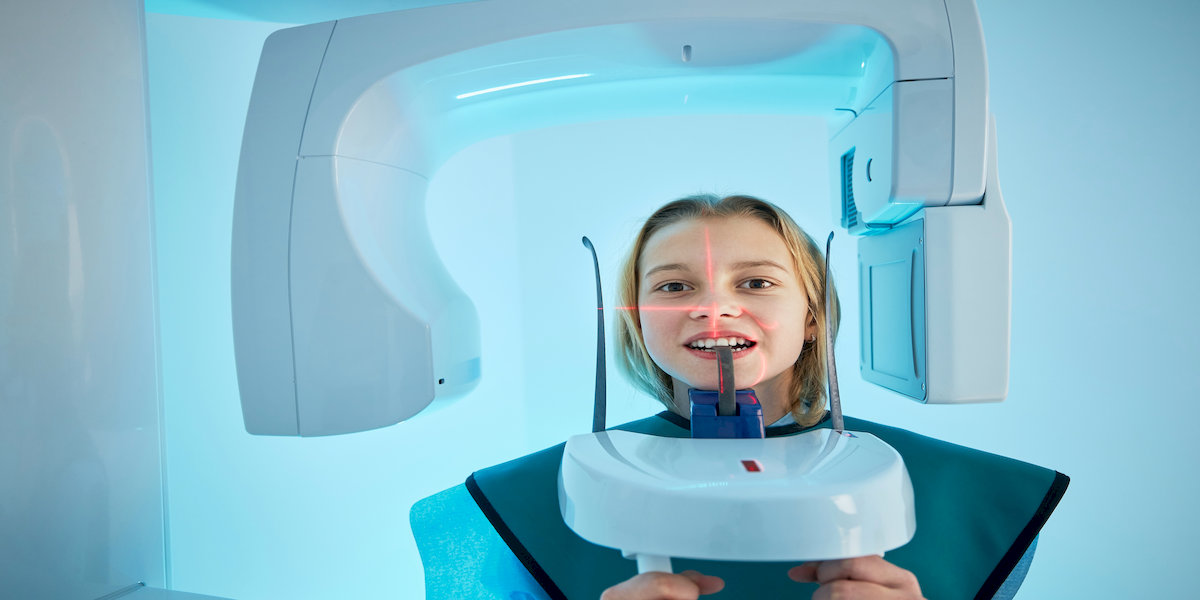
In many cases, dental X-rays provide important information that cannot be gathered from a visual exam alone. Panoramic images allow our team to see the position of teeth still developing beneath the gumline, check for any missing or extra teeth, and identify whether permanent teeth appear to be tracking into the correct positions. After gathering this information, we’ll walk you through what we found, explain what it means for your child’s development, and discuss whether any action is recommended.
Signs That May Warrant an Earlier Evaluation
While the AAO recommends a first evaluation by age seven, there are circumstances where it is worth bringing your child in sooner. Certain issues are easier to address during specific windows of jaw growth, and waiting can sometimes reduce the effectiveness of early intervention. Some signs to watch for include the following:
- Early or late loss of baby teeth relative to what is typical for your child’s age
- Difficulty chewing, biting, or speaking that does not seem to have a clear cause
- Mouth breathing, snoring, or other signs of a potential airway concern
- Crowded, overlapping, or noticeably misaligned front teeth
- A jaw that shifts, clicks, or appears off-center when biting
If you observe any of these signs in your child, it is worth scheduling an evaluation before the standard age-seven milestone. Early assessment gives our team more time and more treatment options.
What Happens After the Evaluation
The outcome of a pediatric orthodontic evaluation falls into one of a few categories. If your child’s development looks appropriate for their age and no concerns are identified, we’ll simply note our findings and continue monitoring at routine visits. If a developing issue is present but early treatment is not yet indicated, we’ll schedule periodic check-ins timed to your child’s growth pattern to make sure we can act when the timing is right. If treatment is recommended, we’ll explain the options clearly, including what the treatment involves, what it aims to achieve, and what the expected timeline looks like.
Interceptive orthodontic treatment, sometimes called Phase 1 treatment, can take many forms depending on the issue being addressed. Palatal expanders, space maintainers, and other appliances may be used to guide jaw growth, create room for incoming teeth, or correct bite relationships while the jaw is still actively developing. Our Morgan Hill team will discuss every aspect of any recommended treatment so your family can make a fully informed decision.
Bay Area Kids Dentist: Comprehensive Orthodontic Evaluations in Morgan Hill
At Bay Area Kids Dentist, we take a whole-child approach to pediatric dental care, and that includes monitoring the growth and alignment of your child’s teeth and jaw from an early age. Our Morgan Hill office is designed to be a place where children feel comfortable and where parents feel informed and supported. We communicate clearly, explain our findings thoroughly, and never recommend treatment unless it is genuinely in your child’s best interest. We accept Delta Dental PPO, Cigna Dental, and TRICARE, and offer flexible payment options including CareCredit, Cherry, and HSA/FSA to help make comprehensive care accessible for your family.
If your child is approaching age seven or if you’ve noticed any signs of developing orthodontic concerns, we encourage you to reach out to our team. Schedule your child’s evaluation today through our contact form and give their smile the strong, well-supported start it deserves.
Problems We Treat
 Emergency Tooth Extraction
- Severe Toothache
- Loose or Dislodged Tooth
- Bleeding Gums
- Knocked Out Tooth
- Infection or Swelling in the Mouth
- Jaw Pain
- Chipped or Cracked Tooth


FAQs
When should I begin brushing my baby’s teeth?
Start brushing as soon as the very first tooth appears, usually around 6 months. Utilize a soft-bristled toothbrush and a tiny smear of fluoride toothpaste.
How do I stop my kid from getting cavities?
Help your child brush their teeth twice a day with fluoride toothpaste, limit sugary snacks and drinks, and visit the dentist periodically for cleanings and check-ups.
How do I know if my kid has a cavity?
Watch for signs such as tooth pain, sensitivity to very hot or cold temperatures, visible holes, or dark spots. Regular dental visits help catch cavities early.
What happens if I don’t fix a cavity in a baby tooth?
Untreated cavities may lead to pain, infection, and may affect how adult teeth come in. It’s important to treat them, even in baby teeth.
Why is my child complaining about tooth pain?
It could be a cavity, tooth injury, gum infection, or something stuck between the teeth. A dental checkup can find the cause.
What causes sudden tooth pain in kids?
Sudden pain may be caused by a cavity, a cracked tooth, an abscess, or even sinus pressure. It’s best to have a dentist examine it.
When do baby teeth start coming in?
Most babies get their first tooth between 6 to 10 months, starting with the lower front teeth.
Why does my child’s gums bleed when brushing?
Bleeding gums can be caused due to brushing too hard, plaque buildup, or the early stages of gum disease. Ensure your child brushes their teeth gently and regularly.
What does it mean if my child’s breath smells bad all the time?
Persistent bad breath can indicate poor brushing, cavities, gum issues, dry mouth, or even allergies. A dental checkup can help find the reason.
Is thumb-sucking bad for my child’s teeth?
Thumb-sucking is normal in babies, but it can affect tooth alignment if it continues past age 4. Consult your dentist if you are concerned.
What should I do if my child knocks out a tooth?
If it’s a baby tooth, don’t try to put it back—call us for advice. If it’s a permanent tooth, gently rinse it and try to place it back in the socket or in milk, and come to the dentist right away.
Why does my child grind their teeth at night?
Nighttime grinding (bruxism) is common in kids and can be caused due to stress, misaligned teeth, or sleep issues. We can evaluate if treatment is needed.
What foods are bad for kids’ teeth?
Sugary snacks, sticky candies, soda, and even dried fruits can lead to cavities. Encourage water, fruits, and crunchy veggies instead.
Are bleeding gums in kids a sign of something serious?
Not always, but it can be an early sign of gum disease or poor oral hygiene. Regular brushing and checkups help keep gums healthy.
At what age do kids usually need braces?
Many kids start orthodontic evaluation around age 7. Early checks help plan for braces if needed.
Is mouthwash safe for kids?
Yes, but only for kids over age 6 who can spit it out. Choose child-friendly mouthwashes with fluoride.


White Filling
Bay Area Kids Dentist in Morgan Hill, CA, provides practical solutions for child tooth decay…

Space Maintainers
When a child loses a baby tooth early, the surrounding teeth might shift into the space…

Tooth Extractions
Bay Area Kids Dentist in Morgan Hill, CA, offers expert tooth extraction services tailored...

Tooth Crowns
At Bay Area Kids Dentist in Morgan Hill, CA, we offer advanced custom pediatric dental solutions…

Special Needs Dental Care
At Bay Area Kids Dentist in Morgan Hill, CA, we recognize the unique challenges children…

Sedation Dentistry
At Bay Area Kids Dentist in Morgan Hill, CA, we offer a range of sedation options to ensure…

Laughing Gas
Laughing gas, publicly known as nitrous oxide, helps children who are highly fearful of the dentist…

Pediatric Emergency Dental Care
At Bay Area Kids Dentist in Morgan Hill, CA, we specialize in providing prompt and effective emergency…

First Appointment
Comprehensive Toddler Dental Care Guide, including information on oral hygiene…
In-office prescription toothpaste available
At Bay Area Kids Dentist in Morgan Hill, CA, we offer in-office prescription toothpaste designed…

Oral Hygiene Instruction
Startlingly, the American Academy of Pediatric Dentistry reports that tooth decay affects…

Dietary Counseling
Bay Area Kids Dentist in Morgan Hill, CA, acknowledges that diet plays a significant role in maintaining…

Digital X-Rays
Our Morgan Hill dental office is equipped with digital X-rays, ensuring the safest and most effective…

Silver Diamine Fluoride
At Bay Area Kids Dentist in Morgan Hill, we offer silver diamine fluoride (SDF) as an innovative solution…

Sealants
Dental sealants are a thin coating of composite material that forms a hardened shield over the tooth…


Kid’s Early Dental Care
Infants, toddlers, and children are not immune to the problems of oral health. In 2000, a study from…