
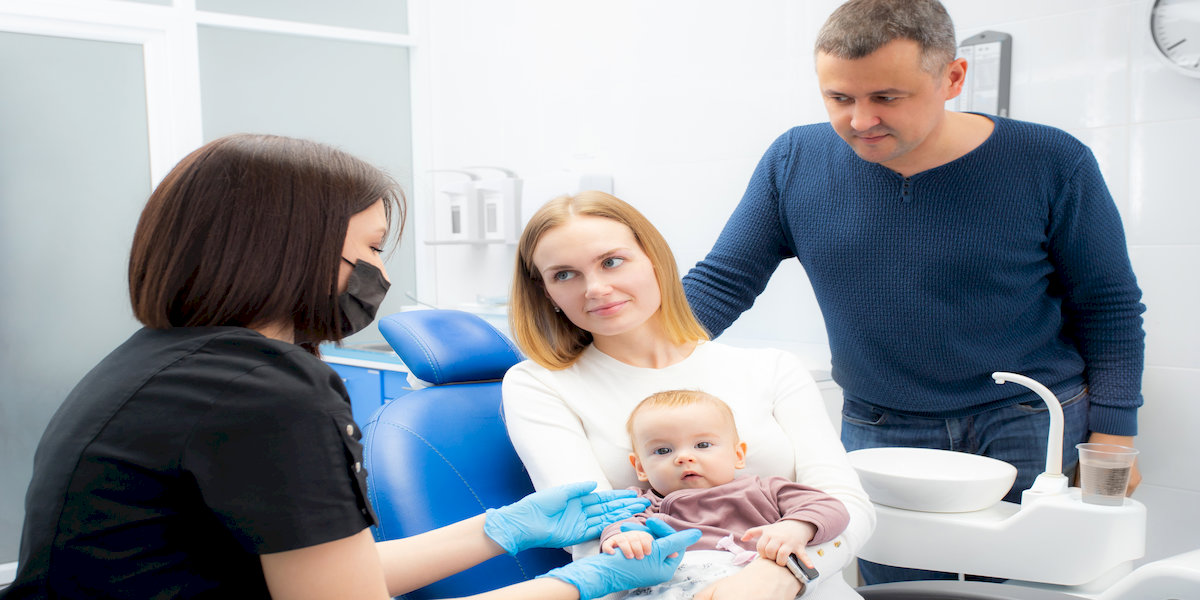
Most parents know to schedule their child’s first well-baby visit within days of birth, their two-month vaccines, and their one-year checkup with a pediatrician. What far fewer parents know is that the first dental visit belongs on that same timeline. Baby teeth are susceptible to decay from the very moment they emerge, and the conditions that lead to early childhood caries can begin developing well before a parent would ever notice anything visibly wrong. A 2022 study published in the National Institutes of Health’s National Library of Medicine found that the first dental visit within the first year of life has a significant positive impact on children’s oral health, as it provides caries risk assessment, anticipatory guidance on oral hygiene and diet, and the kind of early professional engagement that shapes lifelong dental health behavior. Despite this evidence, delayed first visits remain extremely common, with many families not seeking dental care for their infants until a problem has already taken hold.
At Bay Area Kids Dentist in Sunnyvale, CA, our board-certified pediatric dentists welcome infants for their first oral health exam beginning around the time the first tooth appears, and no later than the first birthday. This recommendation aligns with guidance from the American Academy of Pediatric Dentistry (AAPD), the American Academy of Pediatrics, and the American Dental Association, all of which recognize the age-one dental visit as the appropriate starting point for a child’s dental home. Our team brings both the clinical expertise and the warm, unhurried approach that infants and new parents deserve during what is often an unfamiliar experience.
Why Baby Teeth Need Professional Attention From the Start
There is a common misconception that primary teeth, because they will eventually be replaced, are not worth the same level of protective attention as permanent teeth. In reality, baby teeth serve a range of essential functions that directly influence how a child eats, speaks, and develops during the years when they are present, and they also act as natural placeholders that guide permanent teeth into their correct positions. When primary teeth are lost too early due to untreated decay, the surrounding teeth can shift and create crowding that complicates the permanent dentition for years to come.
Early childhood caries, the term used for tooth decay in children under age six, is not a rare condition. It progresses more rapidly in primary teeth than many parents expect, and it can reach a point requiring significant treatment in children who are still very young. Establishing a dental home in infancy gives our team the opportunity to identify early signs of decay before they escalate, apply preventive treatments at the right moments, and keep parents informed about the specific risk factors present in their child’s individual situation.
What Happens at an Infant Oral Health Exam
The first dental visit for an infant is designed to accomplish several things simultaneously. It is a clinical assessment, an educational session for parents, the beginning of an ongoing relationship with a provider, and an early positive introduction to the dental environment, all in one appointment.
Oral Examination
Our Sunnyvale pediatric dentists examine all visible oral tissues, including the gums, the emerging teeth if present, the palate, the tongue, and the soft tissues of the cheeks and lips. We look for any signs of early decay, gum irritation, abnormal tissue, structural considerations such as tongue-tie, and anything else that would benefit from early attention. We also assess the infant’s bite and jaw development and note any habits that are already forming.
Caries Risk Assessment
Not every infant carries the same level of risk for developing tooth decay. Our team evaluates a range of contributing factors, including feeding patterns, the presence of sweet or acidic beverages in the child’s diet, whether the parent or primary caregiver has active decay or a history of significant dental disease, whether the child is being put to bed with a bottle, and whether fluoride exposure is adequate. This assessment shapes the preventive guidance we provide and helps us determine how frequently the child should be seen going forward.
Anticipatory Guidance for Parents
One of the most valuable elements of the infant oral health exam is the conversation we have with parents. Anticipatory guidance is the term used for age-appropriate counseling that prepares caregivers for what to expect as their child’s oral development unfolds and gives them the specific information they need to protect their child’s teeth between visits. Topics typically covered include how and when to begin brushing, the appropriate amount of fluoride toothpaste to use, guidance about bottle and sippy cup habits, teething and what to expect, pacifier use, and when to expect the next teeth to emerge.
Fluoride Varnish
Depending on the infant’s risk assessment findings, our team may apply fluoride varnish at the first visit or at subsequent early visits. Fluoride varnish is a professionally applied, highly concentrated fluoride treatment that is painted directly onto the teeth in a matter of seconds. It is safe, well-tolerated by infants, and recommended by both the AAPD and the U.S. Preventive Services Task Force for children beginning at the time of first tooth eruption.
Building the Foundation of a Dental Home
The concept of a dental home is central to pediatric dentistry. A dental home is an ongoing relationship with a provider who knows a child’s full oral health history, can monitor their development over time, and is available for both routine care and unexpected concerns. When a child’s dental home is established in infancy, that continuity of care shapes everything that follows. Our team gets to know each child from the very beginning, which means we understand their baseline, notice changes early, and can provide consistent guidance that evolves as the child grows.
For new parents navigating an enormous number of decisions and appointments in the first year of life, adding a dental visit to the schedule may feel like one more item on an already full list. But the infant oral health exam is brief, gentle, and enormously productive. It sets a trajectory for your child’s oral health that pays dividends for years to come.
Bay Area Kids Dentist: Infant Oral Health Exams in Sunnyvale
At Bay Area Kids Dentist, our board-certified pediatric dentists are specifically trained for the unique clinical and interpersonal demands of treating infants and very young children. We understand how to make early dental visits calm and comfortable for babies, and how to give new parents the clear, practical information they need to feel confident about their child’s oral health at home. Our Sunnyvale practice has been built on a commitment to prevention-first care that begins at the very start of a child’s dental development. We accept Delta Dental PPO, Cigna Dental, and TRICARE, and offer flexible payment options including CareCredit, Cherry, HSA/FSA, and membership and discount plans.
If your infant has their first tooth or is approaching their first birthday, now is the right time to schedule their first oral health exam. Reach out to our Sunnyvale team through our contact form and let us help your child start their dental journey on the strongest possible footing.
Problems We Treat
 Emergency Tooth Extraction
- Severe Toothache
- Loose or Dislodged Tooth
- Bleeding Gums
- Knocked Out Tooth
- Infection or Swelling in the Mouth
- Jaw Pain
- Chipped or Cracked Tooth


FAQs
When should I begin brushing my baby’s teeth?
Start brushing as soon as the very first tooth appears, usually around 6 months. Utilize a soft-bristled toothbrush and a tiny smear of fluoride toothpaste.
How do I stop my kid from getting cavities?
Help your child brush their teeth twice a day with fluoride toothpaste, limit sugary snacks and drinks, and visit the dentist periodically for cleanings and check-ups.
How do I know if my kid has a cavity?
Watch for signs such as tooth pain, sensitivity to very hot or cold temperatures, visible holes, or dark spots. Regular dental visits help catch cavities early.
What happens if I don’t fix a cavity in a baby tooth?
Untreated cavities may lead to pain, infection, and may affect how adult teeth come in. It’s important to treat them, even in baby teeth.
Why is my child complaining about tooth pain?
It could be a cavity, tooth injury, gum infection, or something stuck between the teeth. A dental checkup can find the cause.
What causes sudden tooth pain in kids?
Sudden pain may be caused by a cavity, a cracked tooth, an abscess, or even sinus pressure. It’s best to have a dentist examine it.
When do baby teeth start coming in?
Most babies get their first tooth between 6 to 10 months, starting with the lower front teeth.
Why does my child’s gums bleed when brushing?
Bleeding gums can be caused due to brushing too hard, plaque buildup, or the early stages of gum disease. Ensure your child brushes their teeth gently and regularly.
What does it mean if my child’s breath smells bad all the time?
Persistent bad breath can indicate poor brushing, cavities, gum issues, dry mouth, or even allergies. A dental checkup can help find the reason.
Is thumb-sucking bad for my child’s teeth?
Thumb-sucking is normal in babies, but it can affect tooth alignment if it continues past age 4. Consult your dentist if you are concerned.
What should I do if my child knocks out a tooth?
If it’s a baby tooth, don’t try to put it back—call us for advice. If it’s a permanent tooth, gently rinse it and try to place it back in the socket or in milk, and come to the dentist right away.
Why does my child grind their teeth at night?
Nighttime grinding (bruxism) is common in kids and can be caused due to stress, misaligned teeth, or sleep issues. We can evaluate if treatment is needed.
What foods are bad for kids’ teeth?
Sugary snacks, sticky candies, soda, and even dried fruits can lead to cavities. Encourage water, fruits, and crunchy veggies instead.
Are bleeding gums in kids a sign of something serious?
Not always, but it can be an early sign of gum disease or poor oral hygiene. Regular brushing and checkups help keep gums healthy.
At what age do kids usually need braces?
Many kids start orthodontic evaluation around age 7. Early checks help plan for braces if needed.
Is mouthwash safe for kids?
Yes, but only for kids over age 6 who can spit it out. Choose child-friendly mouthwashes with fluoride.


Check-ups and Cleanings
At Bay Area Kids Dentist, we provide thorough dental cleaning and check-up services for children in Sunnyvale, CA...

Sealants
Dental sealants are a thin coating of composite material that forms a hardened shield over the tooth...

Silver Diamine Fluoride
At Bay Area Kids Dentist in Sunnyvale, CA, we offer silver diamine fluoride (SDF) as an innovative solution...

Digital X-Rays
Our dental clinic is equipped with digital X-rays, ensuring the safest and most effective imaging for your child...

Dietary Counseling
At Bay Area Kids Dentist in Sunnyvale, CA, we are aware that diet plays a crucial role in maintaining your child's oral health.

Oral Hygiene Instruction
Startlingly, the American Academy of Pediatric Dentistry reports that tooth decay affects a staggering 40% of children...
In-office prescription toothpaste available
At Bay Area Kids Dentist in Sunnyvale, CA, we offer in-office prescription toothpaste designed to enhance your child’s tooth...

First Appointment
At Bay Area Kids Dentist, we understand that a toddler's first dental appointment is an important step...

Pediatric Emergency Dental Care
At Bay Area Kids Dentist in Sunnyvale, CA, we specialize in providing prompt and effective emergency pediatric dental care...

Laughing Gas
Laughing gas, publicly known as nitrous oxide, helps children who are highly fearful of the dentist feel more relaxed...

Sedation Dentistry
At Bay Area Kids Dentist in Sunnyvale, CA, we perform a range of sedation options to ensure your child's comfort...

Special Needs Dental Care
At Bay Area Kids Dentist in Sunnyvale, CA, we recognize the unique challenges children with special health needs face...

Tooth Crowns
At Bay Area Kids Dentist, we offer advanced custom pediatric dental solutions tailored...

Tooth Extractions
At Bay Area Kids Dentist in Sunnyvale, CA, we offer expert tooth extraction services tailored to the unique needs of children...

Space Maintainers
When a child loses a baby tooth early, the surrounding teeth might shift into the space, leading to alignment...

White Filling
At Bay Area Kids Dentist in Sunnyvale, CA, we provide practical solutions for child tooth decay...
