
For some children, a trip to the dentist is genuinely difficult, and that difficulty goes well beyond simply being nervous. Dental anxiety is a recognized and common experience in pediatric patients, with research published in the journal Frontiers in Pediatrics estimating its prevalence in children at anywhere from 5 to 20 percent, though true rates may be higher since the most anxious children often avoid care altogether. When a child’s fear, age, or behavioral challenges make it impossible to complete necessary dental treatment safely and comfortably using standard techniques, sedation dentistry offers a compassionate, evidence-based solution. Far from being a last resort, sedation is a well-established tool in pediatric dental care that helps children receive the treatment they need without the trauma of a distressing experience.
At Bay Area Kids Dentist in Morgan Hill, CA, we believe that every child deserves dental care that prioritizes their comfort and emotional wellbeing alongside their oral health. Our board-certified pediatric dentists hold certification through the American Board of Pediatric Dentistry (ABPD), which reflects the highest standard of specialized training in treating children, including those who require sedation to receive care safely and effectively. We approach every sedation appointment with thorough preparation, continuous monitoring, and the kind of genuine warmth that helps families feel supported throughout the entire process.
Who May Benefit From Pediatric Sedation Dentistry
Sedation dentistry is not recommended for every child, and our team evaluates each patient individually to determine whether it is appropriate and which type of sedation best fits the child’s needs. That said, there are several common situations where sedation offers clear benefits for pediatric patients.
Children who may be good candidates for sedation dentistry include those with any of the following:
- Significant dental anxiety or fear that makes cooperation difficult or impossible
- Extensive treatment needs that would require multiple lengthy appointments without sedation
- Very young age, particularly toddlers and preschool-aged children who lack the developmental ability to sit still through treatment
- Special health care needs, including cognitive, physical, or behavioral conditions that affect their ability to cooperate
- A sensitive gag reflex that interferes with the delivery of necessary treatment
- A history of traumatic dental experiences that has made future visits especially stressful
If your child falls into one of these categories, sedation may not only make treatment possible but may also help prevent the formation of long-term dental anxiety that can persist well into adulthood.
Types of Sedation Used in Pediatric Dentistry
Pediatric sedation is not a single approach. There are several options, and the right choice depends on your child’s age, health history, the type of treatment being performed, and the level of anxiety or behavioral challenge involved. Our team will review all of these factors and discuss recommendations with you before any sedation is administered.
Nitrous Oxide
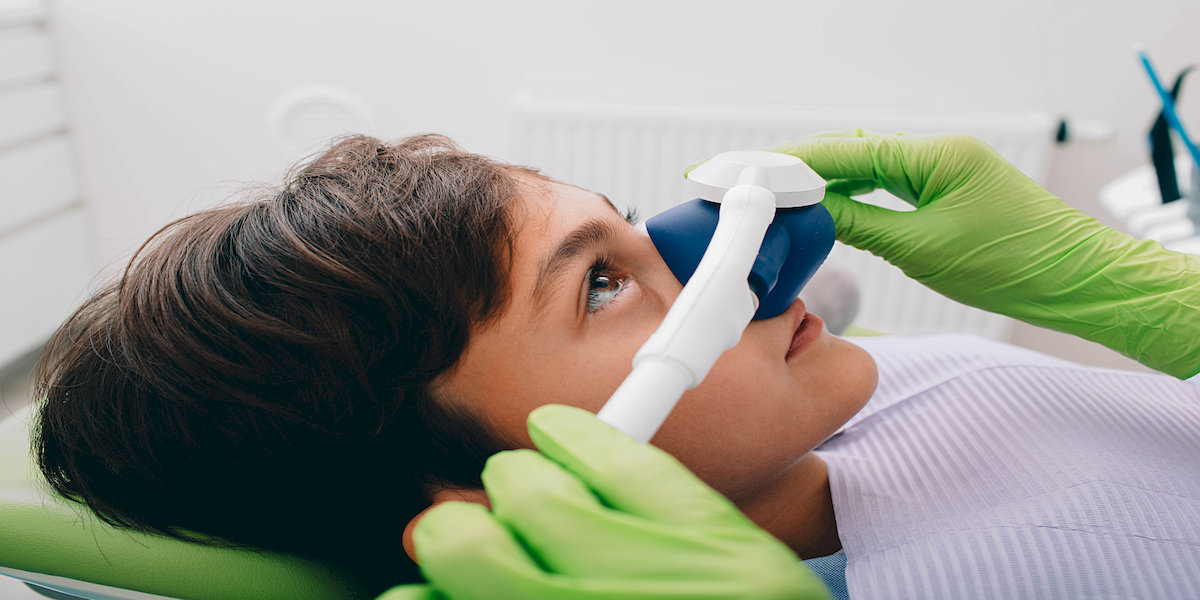
Nitrous oxide, commonly called laughing gas, is the mildest form of sedation used in pediatric dentistry and is appropriate for children with mild to moderate anxiety. It is inhaled through a small, comfortable mask placed over the nose and produces a relaxed, calm feeling within a few minutes. Nitrous oxide does not put children to sleep. They remain awake and can communicate with our team throughout the visit. One of its most appealing qualities is how quickly it wears off. Within minutes of breathing normal air, its effects are gone completely, and most children can return to their regular activities right after their appointment.
Oral Conscious Sedation
For children who need more support than nitrous oxide alone can provide, oral conscious sedation involves the administration of a liquid or pill medication before the appointment. The child remains conscious and able to follow simple instructions but enters a deeply relaxed state that significantly reduces anxiety and in some cases produces limited memory of the procedure. This type of sedation is typically combined with nitrous oxide and local anesthesia to maximize comfort and effectiveness. Children receiving oral conscious sedation will need a responsible adult to remain with them throughout the appointment and to take them home afterward, as the effects can linger for a few hours.
General Anesthesia
General anesthesia renders the child fully unconscious and is reserved for cases involving very young children, patients with significant special health care needs, or situations where extensive treatment cannot be completed safely under lighter sedation. Bay Area Kids Dentist follows the guidelines established by the American Academy of Pediatric Dentistry (AAPD) regarding the administration and monitoring requirements for all levels of sedation, ensuring that every appropriate safety standard is met.
What to Expect Before, During, and After the Appointment
Preparation plays an important role in the safety and success of any sedation appointment. Prior to the visit, our team will review your child’s full health history, current medications, and any relevant conditions that could affect how they respond to sedation. We’ll provide detailed pre-appointment instructions, including fasting guidelines that vary based on the type of sedation being used, and we’ll answer all of your questions so you feel fully prepared going in.
During the appointment, your child’s vital signs, including heart rate, oxygen levels, and breathing, are continuously monitored by our trained clinical team. Our entire approach is designed to keep the experience as calm and uneventful as possible for both your child and you. After the procedure, we’ll monitor your child until they are stable and ready to go home and provide specific aftercare instructions tailored to the sedation type used.
Bay Area Kids Dentist: Compassionate Sedation Care in Morgan Hill
At Bay Area Kids Dentist, sedation dentistry is an extension of our broader commitment to making dental care a positive experience for every child we treat. Our Morgan Hill office is thoughtfully designed with children’s comfort in mind, and our dental assistants are selected for their genuine care, patience, and love of working with young patients. We understand that the decision to pursue sedation for your child can feel significant, and we are here to make sure you have all the information you need to feel confident. We accept Delta Dental PPO, Cigna Dental, and TRICARE, and offer flexible payment options through CareCredit, Cherry, and HSA/FSA.
To learn more about pediatric sedation dentistry or to schedule a consultation for your child, reach out to our Morgan Hill team through our contact form. We’re here to help your child get the care they need in a way that feels safe, calm, and supported from start to finish.
Problems We Treat
 Emergency Tooth Extraction
- Severe Toothache
- Loose or Dislodged Tooth
- Bleeding Gums
- Knocked Out Tooth
- Infection or Swelling in the Mouth
- Jaw Pain
- Chipped or Cracked Tooth


FAQs
When should I begin brushing my baby’s teeth?
Start brushing as soon as the very first tooth appears, usually around 6 months. Utilize a soft-bristled toothbrush and a tiny smear of fluoride toothpaste.
How do I stop my kid from getting cavities?
Help your child brush their teeth twice a day with fluoride toothpaste, limit sugary snacks and drinks, and visit the dentist periodically for cleanings and check-ups.
How do I know if my kid has a cavity?
Watch for signs such as tooth pain, sensitivity to very hot or cold temperatures, visible holes, or dark spots. Regular dental visits help catch cavities early.
What happens if I don’t fix a cavity in a baby tooth?
Untreated cavities may lead to pain, infection, and may affect how adult teeth come in. It’s important to treat them, even in baby teeth.
Why is my child complaining about tooth pain?
It could be a cavity, tooth injury, gum infection, or something stuck between the teeth. A dental checkup can find the cause.
What causes sudden tooth pain in kids?
Sudden pain may be caused by a cavity, a cracked tooth, an abscess, or even sinus pressure. It’s best to have a dentist examine it.
When do baby teeth start coming in?
Most babies get their first tooth between 6 to 10 months, starting with the lower front teeth.
Why does my child’s gums bleed when brushing?
Bleeding gums can be caused due to brushing too hard, plaque buildup, or the early stages of gum disease. Ensure your child brushes their teeth gently and regularly.
What does it mean if my child’s breath smells bad all the time?
Persistent bad breath can indicate poor brushing, cavities, gum issues, dry mouth, or even allergies. A dental checkup can help find the reason.
Is thumb-sucking bad for my child’s teeth?
Thumb-sucking is normal in babies, but it can affect tooth alignment if it continues past age 4. Consult your dentist if you are concerned.
What should I do if my child knocks out a tooth?
If it’s a baby tooth, don’t try to put it back—call us for advice. If it’s a permanent tooth, gently rinse it and try to place it back in the socket or in milk, and come to the dentist right away.
Why does my child grind their teeth at night?
Nighttime grinding (bruxism) is common in kids and can be caused due to stress, misaligned teeth, or sleep issues. We can evaluate if treatment is needed.
What foods are bad for kids’ teeth?
Sugary snacks, sticky candies, soda, and even dried fruits can lead to cavities. Encourage water, fruits, and crunchy veggies instead.
Are bleeding gums in kids a sign of something serious?
Not always, but it can be an early sign of gum disease or poor oral hygiene. Regular brushing and checkups help keep gums healthy.
At what age do kids usually need braces?
Many kids start orthodontic evaluation around age 7. Early checks help plan for braces if needed.
Is mouthwash safe for kids?
Yes, but only for kids over age 6 who can spit it out. Choose child-friendly mouthwashes with fluoride.


White Filling
Bay Area Kids Dentist in Morgan Hill, CA, provides practical solutions for child tooth decay…

Space Maintainers
When a child loses a baby tooth early, the surrounding teeth might shift into the space…

Tooth Extractions
Bay Area Kids Dentist in Morgan Hill, CA, offers expert tooth extraction services tailored...

Tooth Crowns
At Bay Area Kids Dentist in Morgan Hill, CA, we offer advanced custom pediatric dental solutions…

Special Needs Dental Care
At Bay Area Kids Dentist in Morgan Hill, CA, we recognize the unique challenges children…

Sedation Dentistry
At Bay Area Kids Dentist in Morgan Hill, CA, we offer a range of sedation options to ensure…

Laughing Gas
Laughing gas, publicly known as nitrous oxide, helps children who are highly fearful of the dentist…

Pediatric Emergency Dental Care
At Bay Area Kids Dentist in Morgan Hill, CA, we specialize in providing prompt and effective emergency…

First Appointment
Comprehensive Toddler Dental Care Guide, including information on oral hygiene…
In-office prescription toothpaste available
At Bay Area Kids Dentist in Morgan Hill, CA, we offer in-office prescription toothpaste designed…

Oral Hygiene Instruction
Startlingly, the American Academy of Pediatric Dentistry reports that tooth decay affects…

Dietary Counseling
Bay Area Kids Dentist in Morgan Hill, CA, acknowledges that diet plays a significant role in maintaining…

Digital X-Rays
Our Morgan Hill dental office is equipped with digital X-rays, ensuring the safest and most effective…

Silver Diamine Fluoride
At Bay Area Kids Dentist in Morgan Hill, we offer silver diamine fluoride (SDF) as an innovative solution…

Sealants
Dental sealants are a thin coating of composite material that forms a hardened shield over the tooth…


Kid’s Early Dental Care
Infants, toddlers, and children are not immune to the problems of oral health. In 2000, a study from…